
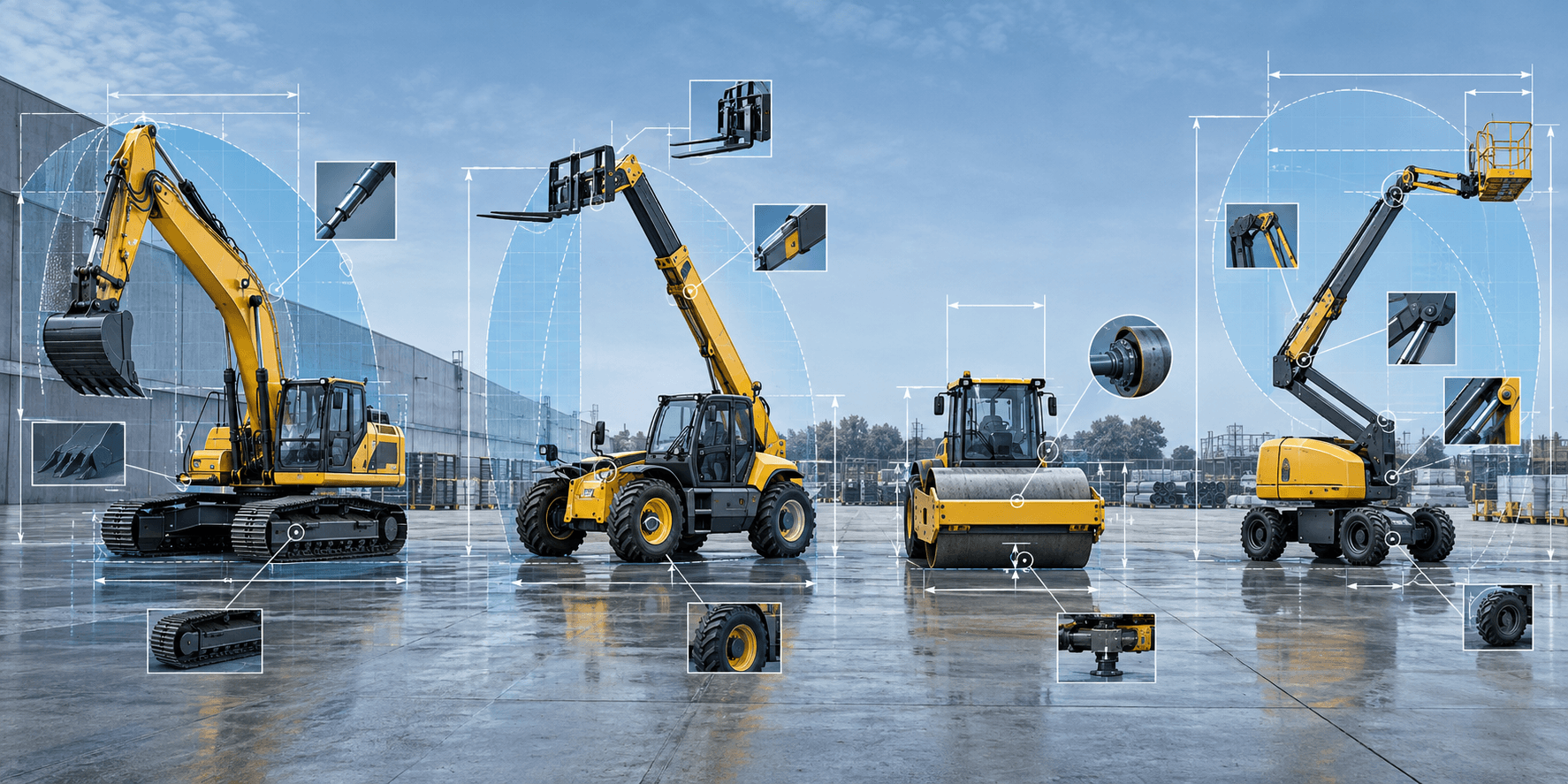
Output and capacity
Set the production target, load, reach, depth, height or duty point that the machine must deliver.
Distinguish the required result from a headline brochure figure. Ask the supplier to assess the task at the actual working position and configuration. For example, a maximum reach or capacity does not describe every point in a working cycle. Retain the model-specific information used in the assessment.
Envelope and access
Capture transport dimensions, tail swing, outrigger footprint, turning, ground pressure and clearance limits.
Record separate envelopes for transport, travel and work. Folding or retracted equipment can have a different footprint when operating. Ask the responsible site team to review the proposed position and route, and make sure unloading constraints are included in the enquiry.
Attachments and interfaces
List mandatory attachments, couplers, auxiliary hydraulics, power connections and acceptable substitutions.
Put the machine and attachment identities together in the proposal. Ask which adapters, hoses, leads or other accessories are included. When either item changes, repeat the interface check instead of assuming that compatibility transfers across a nominal machine class.
Compliance and evidence
Request machine identity, inspection status, operator competency and project-specific documents before arrival.
Identify what the receiving site actually requires and who reviews it. Request relevant documents before the delivery window so gaps can be resolved without holding a vehicle at the gate. Keep documentation status separate from live availability; one does not establish the other.
Practical answers before you hire
What if I do not yet know the machine I need?
Describe the result, material, access and working window. Ask suppliers to propose equipment and explain how it meets those requirements.
When should I reconfirm this information?
Reconfirm before dispatch and whenever the site, machine, attachment, programme or hire terms change.