
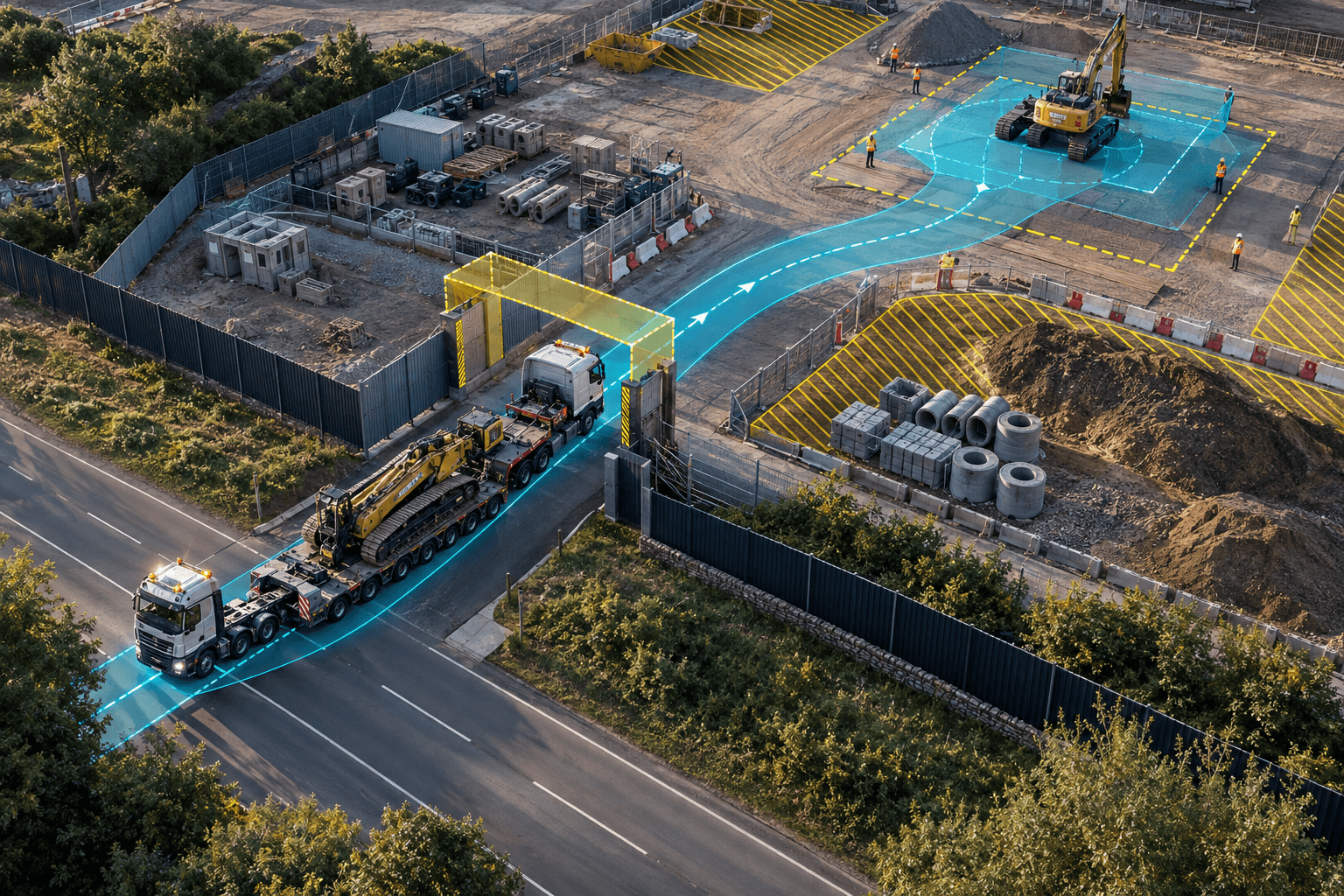
Map the arrival route
Record gate width, turning radii, overhead services, bridge or pavement limits, gradients and public-road constraints. Include the float or delivery vehicle—not only the machine.
Use a marked-up route plan with the intended entrance and direction of approach. Ask the transport provider to assess the proposed vehicle against the route information and identify any further checks. Record who will reconfirm access before dispatch, especially if roadworks or other deliveries can change the approach.
Design the unloading zone
Nominate a stable, separated area for ramps, lifting, assembly and pre-start checks. Document traffic controls, spotters, exclusion zones and lighting for the planned delivery window.
Reserve the unloading space in the site programme and communicate that reservation to other trades. A suitable area on a drawing may be occupied on delivery day. Include the receiving person's phone number and a clear process for contacting them if the driver arrives early or cannot enter.
Trace the path to work
Check ground bearing, soft edges, trenches, temporary works, clearances and interaction with people or live operations between unloading and the workface.
Walk the route with the people responsible for site access and the intended task. Photograph the narrowest points and note measured dimensions. If temporary storage, trenches or staging changes affect the route, issue an updated brief rather than assuming the original assessment still applies.
Issue one access brief
Send annotated photos, dimensions, site contact, arrival window and escalation process with the enquiry. Reconfirm whenever staging or site conditions change.
Give the brief a date and version, then send the same copy to procurement, site staff and the supplier. Ask for acknowledgement of unresolved access questions. Keep delivery and collection requirements together so a machine is not placed somewhere that later becomes difficult to reach.
Practical answers before you hire
What if I do not yet know the machine I need?
Describe the result, material, access and working window. Ask suppliers to propose equipment and explain how it meets those requirements.
When should I reconfirm this information?
Reconfirm before dispatch and whenever the site, machine, attachment, programme or hire terms change.